


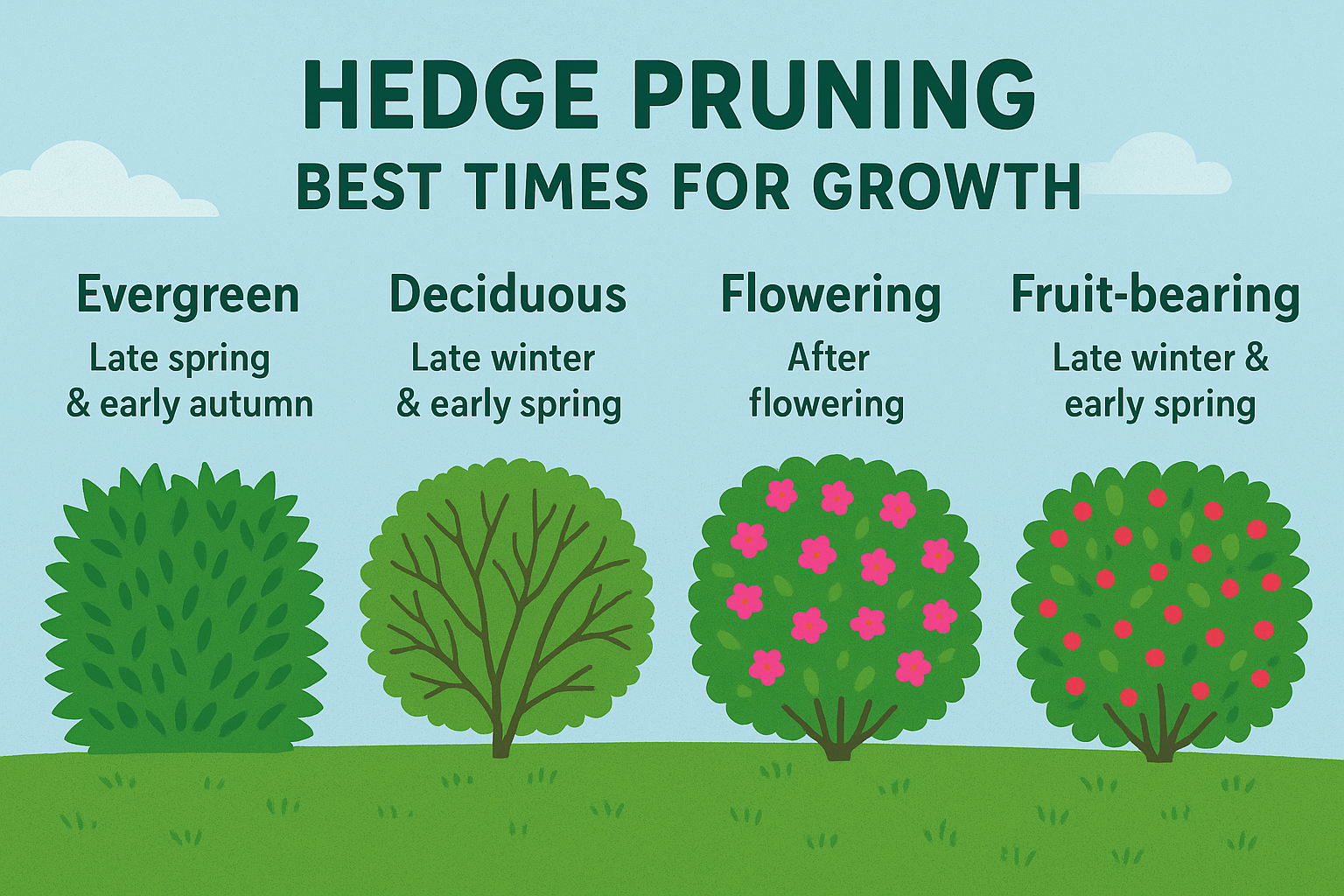
When you’re trimming hedges, timing’s super important for keeping them healthy. Each type of hedge has its own perfect time to be pruned, matching up when it grows best.
Cutting them at the right time helps with airflow, lets more sunlight in, and keeps pests away. Plus, it helps them heal faster and get ready for the next season.
But if you miss that perfect timing, your hedges might end up looking a bit rough and struggling. So, getting the timing right keeps your hedges looking neat and strong.
Evergreen Hedges
Evergreen hedges are great because they look lively all year and grow quite steadily. Hedges like leylandii and boxwood are popular, but you’ve got to prune them at the right time to keep them looking good and healthy.
The best times to trim these hedges are late spring and early autumn. During these times, they’re growing the most, so they bounce back quickly and don’t get too stressed.
Pruning in late spring helps shape the hedge after its first big growth, and trimming in early autumn gets it ready for the winter. This way, the hedge stays neat and dense.
But watching out for winter pruning—it’s a no-go since the cold can freeze the cuts and cause damage or let diseases in.
Leylandii grows super-fast, so keeping up with this pruning schedule stops it from getting out of hand. Boxwood, with its thick leaves, keeps its classic look and stays healthy when pruned at the right times.
Taking care of your hedges by pruning them properly makes them look amazing and keeps them strong for the long haul.
Deciduous Hedges
Deciduous hedges, like beech and hornbeam, lose their leaves every year and need different care than evergreens. Giving them a good prune in late winter or early spring is the way to go.
This timing, just before they start sprouting again, helps air get in and light reach those inner branches. Trimming beech hedges before they start budding helps them grow strong new shoots and leaves as it warms up.
Hornbeam hedges also love an early cut to keep them in shape and stop them from getting too wild. Doing this at the right time keeps your garden looking neat and lively, making it way easier to manage during the growing season.
So, if you want a lush and tidy garden, it’s worth giving these hedges some love at the right time.
Flowing Hedges
Flowering hedges add loads of colour and lovely smells to gardens, but figuring out the right time to trim them is key to keeping them looking great.
For those spring bloomers like lilacs, it’s best to give them a trim right after they’re done with their flowers. This way, the buds for next spring stay safe and sound. But if you’ve got summer bloomers like hibiscus, it’s smart to prune them in late winter or early spring.
This is perfect for shaping them up before they start growing again, making sure they look tidy and full of flowers.
Knowing when each type of hedge blooms and grows is super important. If you prune them at the wrong time, it might mess up their flowers or shape.
Having a chat with local gardening experts can give you some great tips specific to your hedges, so your garden stays lively and beautiful throughout the year.
Fruit-Bearing Hedges
If you want your fruit hedges to flourish with loads of delicious berries, it’s essential to prune them properly. The prime time for this task is late winter or early spring, just as the frost begins to ease.
This timing is perfect because it allows the plants to concentrate on developing strong, fruit-bearing branches before the growing season kicks into high gear. Take raspberries and blackberries, for instance.
Trimming them back now encourages the growth of new shoots, which are crucial for next season’s bounty. One healthy raspberry cane can sprout 8-10 fresh shoots, so it’s worth the effort!
By sticking to this schedule, you’ll not only enjoy more fruit, but your hedges will also thrive. Removing old, unproductive branches paves the way for new growth, making your plants more robust.
Plus, pruning during this quiet period for plants reduces the risk of diseases sneaking in. I once left a few old canes on a neighbour’s hedge, and they didn’t produce a single berry—lesson learned!
Timing is everything when it comes to keeping your fruit hedges both productive and attractive. A neatly trimmed hedge not only enhances your garden’s appearance but also rewards you with a bountiful harvest.
Why not give it a try this winter and see the difference for yourself? Cheers to the fruitful gardening season!
Regional Climate Considerations
If you wanna keep your hedges looking good and healthy, knowing the local weather is super important. In warmer places, hedges grow faster, so you can trim them earlier without worrying about frost messing them up. This helps keep them in shape and strong.
But if you live somewhere colder, wait until the frost is gone before you start cutting, or you might hurt the plants, and they’ll struggle to bounce back.
To get the best results, it’s a good idea to keep an eye on the weather and be ready to change your pruning plans if needed.
Chatting with local gardening experts can give you some great tips specific to where you live, helping your hedges grow better and healthier.
Changing your pruning schedule based on the weather not only makes your garden look awesome but also keeps it growing nicely no matter where you are. Timing really is everything if you want your garden to look vibrant all year round.
Effective Hedge Pruning Tips
Pruning hedges is all about doing it at the right time and with the right gear. Make sure your shears or trimmers are sharp so you get nice, clean cuts. This helps keep bugs and infections away.
If your tools are blunt, you might end up with messy cuts and problems. It’s smart to wear gloves and goggles to keep safe from thorns and bits flying around.
Setting up a pruning schedule is a great way to keep your hedges looking good all year. Jot down the best times to prune each type of hedge on a calendar for easy planning.
Also, keeping your tools clean is super important. A quick wipe and sterilize after each use stop plant diseases from spreading. By doing these things, you’ll find it much easier to keep your garden tidy and healthy.
Conclusion
Trimming your hedges at the right time helps them grow better and stronger. If you’ve got evergreen hedges, give them a trim in late spring or early autumn to keep them looking lush.
For those with deciduous hedges, late winter or early spring is the best time to snip them for better light and airflow. If your hedges bloom, cut back the spring varieties after they flower and tackle the summer ones early on.
Fruit hedges should get a trim in late winter or early spring for a good harvest. Don’t forget to think about your local climate and try some handy pruning tips to boost your garden’s health. Give these ideas a go for neat and thriving hedges!
