


A reseller buys products or services and sells them to customers for a profit. Resellers may operate as authorized brand partners or independently through marketplaces and online stores. Their success depends on choosing the right products, controlling costs, and protecting their profit margins. Understanding the rules, taxes, and agreements involved can also help resellers build a sustainable business.
Short answer: The word covers two roles. Authorized channel partners buy at a contracted dealer discount and sell under rules on price, territory, and support. Independent sellers buy at retail or wholesale, then resell on open marketplaces with nobody’s permission. Both earn on the spread, but only one of them signs anything.
Two roles, one word
The authorized side is a contractual relationship. A vendor appoints partners, hands them a discount off list price, and attaches conditions. Sell into this territory. Hit this annual number. Advertise no lower than this price. Break the conditions, and the discount disappears.
The independent side has no relationship at all. You buy an item, you own it, you sell it. Nobody appointed you so nobody can un-appoint you. The trade is no dealer pricing, no marketing funds, and no warranty to pass along.
That split explains almost every argument you will read online. Advice written for one side sounds ridiculous to the other.
The eight types side by side
Each row buys something different, earns differently, and answers to different paperwork.
| Authorized resellers | Branded finished goods at a dealer price | Fixed discount off list, plus volume rebates | Authorization agreement with advertised-price and territory terms | Apple Authorized Resellers |
| Value-added resellers (VARs) | Hardware, software licenses, components | Services layered on top: design, integration, training | Partner agreement with certification tiers | CDW, Insight Enterprises |
| Distributors | Full product lines held in stock, in bulk | Thin spread per unit, roughly 3% to 7%, on heavy volume | Distribution agreement with stocking and territory duties | Ingram Micro, TD SYNNEX |
| Wholesale resellers | Case lots straight from makers | Buys at case price, sells in smaller units | Supply terms or standing purchase orders | Brands selling through Faire |
| Software and SaaS resellers | Seats, licenses and renewals | Recurring discount off list, commonly 20% to 40% | Program terms covering renewals and support | Microsoft Cloud Solution Provider partners |
| Hosting resellers | Server capacity sold wholesale | Markup on capacity split into branded plans | White label plan terms from the upstream host | Agencies on ResellerClub or GreenGeeks plans |
| Ticket resellers | Event tickets on the secondary market | Spread between face value and what the market pays | Platform seller terms plus state resale rules | Sellers on StubHub and SeatGeek |
| Limited-drop resellers | Scarce retail releases: sneakers, cards, consoles | Scarcity premium, minus authentication fees | Marketplace terms and authentication policy | Sellers on StockX and GOAT |
TL;DR
- The word names a role, not a size. Ingram Micro and a teenager on StockX both qualify.
- Authorized partners trade freedom for a discount. Independents trade the discount for freedom.
- Margin arrives from four places: a dealer discount, layered services, rebates, or scarcity.
- A resale certificate lets you buy stock without paying sales tax at purchase. You still collect it from the end buyer.
- The first sale doctrine is why selling genuine goods you own is usually lawful in the United States.
Where a Reseller Margin Actually Comes From

Four mechanisms explain where a reseller earns its margin. The classic is a dealer discount: you buy at 60 cents on the dollar and sell nearer list. VARs add a services markup for design and migration work, while quarterly targets can unlock a volume rebate. Last comes the scarcity premium, which can disappear quickly as market demand changes.
Numbers make the difference obvious. Buy a wholesale hosting plan at $25 a month, carve it into ten branded accounts at $12 each, and you bill $120 against a $25 cost. That is a gross margin near 79%, before you count the hours you spend answering support tickets.
Physical stock behaves nothing like that. Freight, storage, breakage, and packaging all sit between the invoice and the profit, and they scale with units rather than with revenue. If you buy in case lots, look at how wholesale printed boxes get priced before you set a retail number.
What a reseller agreement actually restricts
People assume the contract is about price. Price is one clause of seven, and rarely the one that bites. Here is what an authorization pack controls:
- Scope. Which products you may sell, and to which territory, industry, or customer size.
- Advertised price. A minimum advertised price policy sets a floor on your public listings. Vendors suggest a retail price rather than dictate one, because resale price maintenance draws antitrust attention under the Sherman Act.
- Certification. Named staff holding current credentials, renewed on the vendor’s schedule.
- Brand use. Approved logos, approved claims, and a ban on describing yourself as authorized for lines you were never appointed to sell.
- Targets. An annual revenue commitment that decides next year’s tier and next year’s discount.
- Support duties. Who takes the 2 am call, who ships the replacement, and who pays for it.
- Termination. Usually 30 to 90 days’ notice, plus what happens to the stock still on your shelves.
One clause people always miss sits downstream. Many agreements forbid selling to other resellers, or listing on Amazon and eBay without written consent. That is how brands police gray market supply, and why a marketplace listing can get a partner terminated.
Resale certificates and sales tax in the US
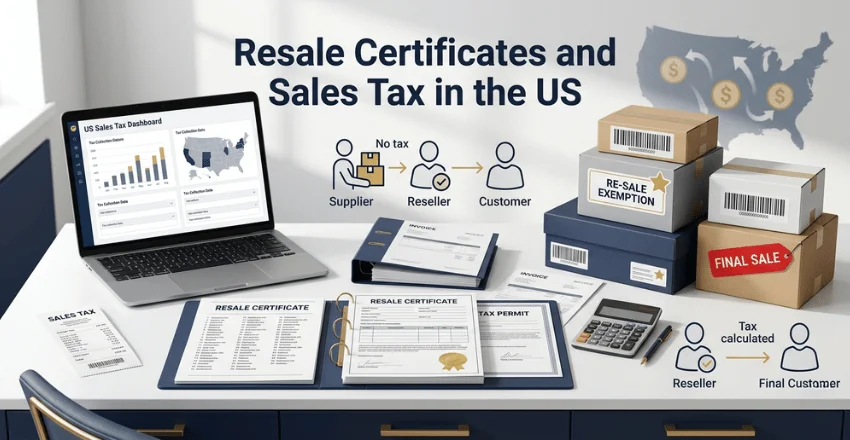
If you buy stock to sell on, you should not be paying sales tax on that purchase. Tax belongs at the final sale, with whoever consumes the product. A resale certificate tells your supplier exactly that.
- Most states expect a sales tax permit first. The certificate follows from the permit, not the other way around.
- The Multistate Tax Commission publishes a uniform resale certificate that most member states accept, which saves filing a separate form in every state.
- Several states accept an out-of-state certificate. Others insist you register with them directly, so check before you assume.
- Mississippi asks for no certificate at all, provided you hold a valid permit.
Then comes the obligation people forget. You collect sales tax from the end buyer wherever you have nexus, physical or economic, and you remit it on schedule. Marketplace facilitator rules mean eBay and Amazon collect on sales made through them. Your own storefront is yours to handle, so weigh what ecommerce website development costs against the marketplace fees you would otherwise pay. Rates and thresholds shift, so confirm with your state revenue department before filing.
Is it legal to resell what you bought?
For genuine goods you own outright, usually yes. Under the first sale doctrine, once a trademark owner sells a specific item, its rights over that item are exhausted. The buyer may then sell it on, and US courts have applied that principle repeatedly.
Three limits matter:
- Materially different goods. An item lacking the US warranty, or differing in formulation or packaging from the domestic version, falls outside the shelter. That is the core of the gray market argument.
- Implied affiliation. You may state that you sell a brand. Calling yourself an authorized dealer when no appointment exists is a trademark problem.
- Sector rules. Ticket resale answers to the federal BOTS Act of 2016, which bans software that beats purchase limits rather than resale itself. The FTC brought its first cases under that law in 2021, and state scalping rules vary on top of that.
Reseller vs distributor vs wholesaler
These three words get used interchangeably, and they should not be. A distributor works under contract with named manufacturers, holds inventory, owns a defined territory, and often supports the partners below it. A wholesaler buys broadly across brands with no formal channel tie and mostly breaks bulk.
The third term is the umbrella: anyone selling on what they bought, at any point in the chain. Obligations are where the split really bites. Distributors carry stocking commitments and forecasts. Wholesalers carry almost none. Independents carry only their own inventory risk.
What decides whether the margin survives
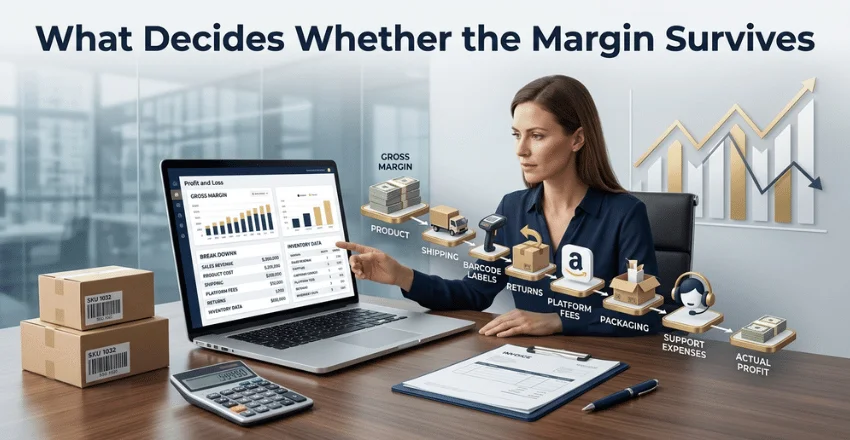
Gross margin is not profit. Returns, platform fees, authentication charges, and support hours all come out of it first. Seller fees plus shipping can eat a fifth of the spread.
Presentation matters more than newcomers expect, especially where a buyer compares three identical listings. Condition photos and honest descriptions move the price you can hold. The way retail packaging makes a product stand out applies just as much to resold stock as to a first-run release.
Your next step
Decide which side of the split you are on before you spend a dollar—chasing the vendor discount? Request the partner application, then read the termination and advertised-price clauses first. Going independent? Register for a sales tax permit in your home state, then price your first ten units with freight, returns, and platform fees already included. The operations that survive priced the boring costs in on day one.
Frequently asked questions
No general license exists. Most states want a sales tax permit, and that permit lets you issue a resale certificate to suppliers. Some categories add their own rules, alcohol and firearms among them. Selling a brand as an authorized partner needs the vendor’s appointment, not a government one.
It depends on the type. Distributors work on roughly 3% to 7% per unit and make it back on volume. Software partners commonly see 20% to 40% off list. White-label hosting clears far more per customer because the cost base is a fixed server bill. Limited-drop sellers swing hardest.
A signed appointment from the brand or one of its distributors. It arrives with a discount schedule, a territory, certification requirements, and advertising rules. Buyers care because authorization carries the manufacturer warranty and official support.
It cannot stop you from selling genuine items you already own. It can refuse to supply you, void the warranty on units bought outside its network, and terminate any partner caught supplying you.
Close, but no. Distributors sign contracts with specific manufacturers, hold territory and stocking duties, and often provide technical support. Wholesalers buy across many brands with no formal channel tie and mainly break bulk.
