



If you’re searching for the loitering meaning, the simplest answer is “staying around a place without an obvious purpose.” The word can describe lingering, waiting idly, or moving slowly instead of continuing on your way.
The everyday definition is simple, but its legal use requires more context. Whether the behavior breaks a rule depends on the location, local law, property rights, and what the person is doing.
| Topic | What to know |
| Basic definition | Staying or lingering somewhere without a clear purpose |
| Word type | “Loitering” can describe the act of loitering or an ongoing action |
| Common synonyms | Lingering, dawdling, hanging around, tarrying |
| Common places | Store entrances, sidewalks, parking lots, parks, stations |
| “No loitering” sign | Usually tells people not to remain in an area without a relevant reason |
| Legal status | Rules vary by jurisdiction and circumstances |
| Trespassing difference | Trespassing focuses on entering or remaining on property without permission |
Direct answer: Loitering means staying, standing, or moving slowly around a place without a clear purpose, often for longer than expected. In everyday English, it can mean lingering or dawdling. In legal settings, the word may describe conduct restricted by local rules under particular circumstances.
Loitering Meaning in Plain English
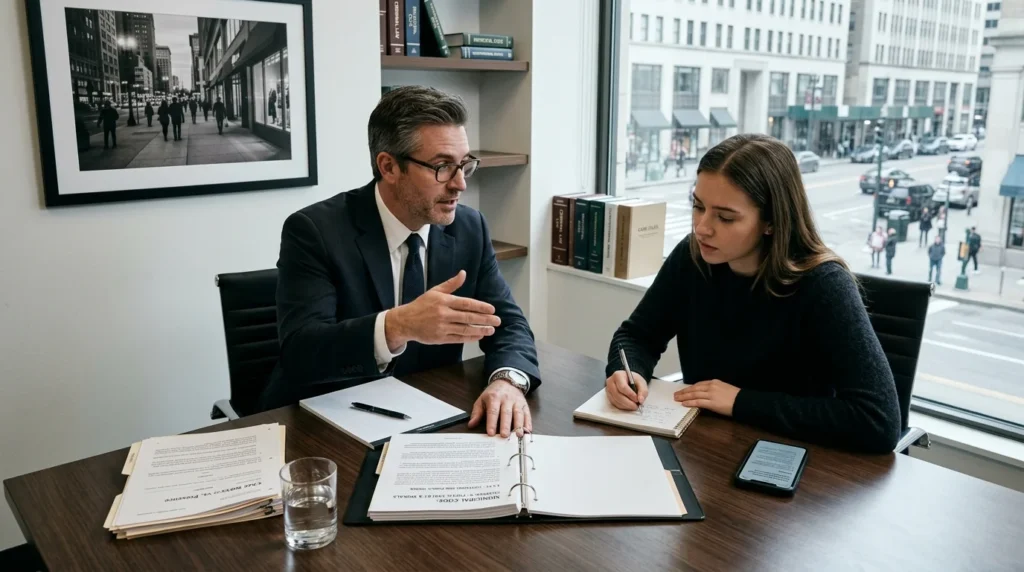
To loiter is to remain somewhere when you don’t seem to have a specific reason for staying. The word can also describe delaying an activity with idle pauses.
That means the word doesn’t always suggest a crime. A parent might tell a child, “Don’t loiter on your way home.” In that sentence, the parent means “don’t waste time” or “don’t hang around.”
The noun can also have a more specific legal meaning related to waiting somewhere under circumstances that suggest possible illegal activity. Context therefore matters when you read or hear the word.
Common Examples of Loitering
The easiest way to understand the term is through everyday situations.
- Someone stands outside a closed shop for a long period without an apparent reason.
- A group gathers around a building entrance, making it difficult for customers to pass.
- A person spends a long time in a parking lot without visiting any businesses or vehicles.
- Someone repeatedly hangs around a restricted area instead of passing through it.
- A person wanders slowly during an errand and keeps making unnecessary stops.
These examples describe behavior that may appear purposeless. They don’t prove that anyone has committed an offense. Legal consequences depend on the relevant rules and circumstances.
A clear purpose can also change how the same behavior appears. Someone waiting at a bus stop has an obvious reason to remain there. The same applies to a person waiting outside a restaurant for a friend.
What Does a “No Loitering” Sign Mean?
A “No Loitering” sign generally tells people not to remain in the area without a reason connected to the property or the activity taking place there.
You may see these signs near stores, parking lots, apartment buildings, schools, or other places where owners want entrances and public-access areas to remain clear.
The sign doesn’t create a universal legal definition. Property rules and local ordinances can differ. Some laws focus on obstruction, public safety, criminal intent, or other specific circumstances rather than on idle presence alone.
For more articles that explain legal topics in accessible language, Magazetty also maintains a dedicated Law section.
Is Loitering Illegal?
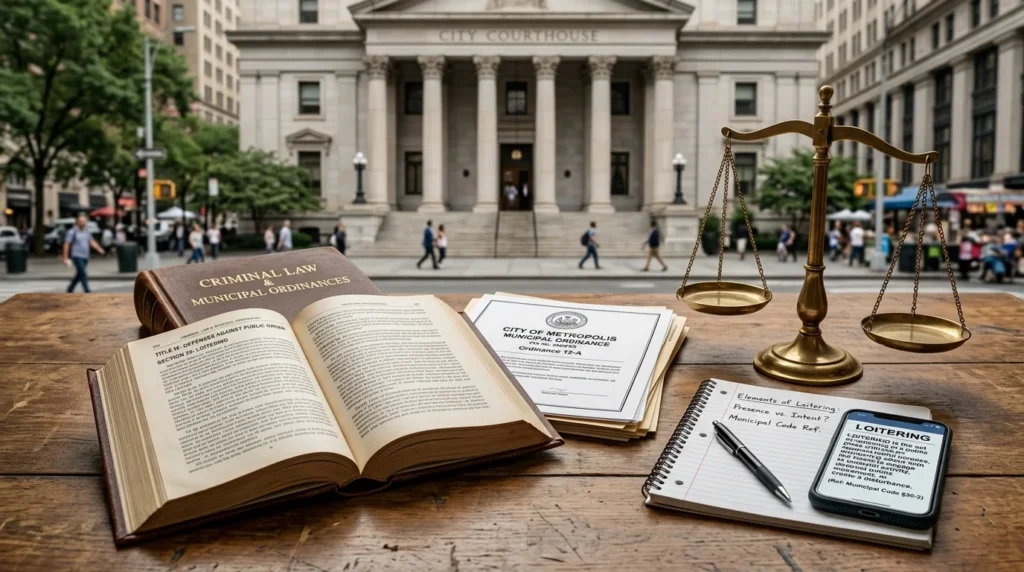
There is no single rule that makes every instance of standing around illegal. Legal restrictions can vary by location, and some laws link loitering to other offenses or specific circumstances. U.S. courts have also examined laws that were written too broadly. Some ordinances have been challenged because they lacked clear standards for enforcement.
This is why the meaning of loitering in a legal context can’t be separated from the actual ordinance or statute involved. If you need guidance about a real incident, check the law for that location or speak with a qualified local lawyer.
Readers interested in property-related legal issues can also see Magazetty’s explanation of premises liability lawyers and legal cases.
Loitering vs. Trespassing
These terms can overlap, but they aren’t identical.
| Term | Main idea | Simple example |
| Loitering | Remaining or lingering without a clear purpose | Staying around a storefront for a long time |
| Trespassing | Entering or remaining on property without permission | Staying on private property after being told to leave |
| Waiting | Remaining somewhere for an identifiable reason | Waiting for a bus or a friend |
| Hanging out | Spending time somewhere socially | Friends talking together in a public park |
Trespassing generally concerns entering or remaining on another person’s property without permission. That focus on permission helps distinguish it from merely lingering in a place.
The distinction also shows why laws vary by location. Magazetty’s article on family laws in Canada offers another example of how legal rules can differ across jurisdictions.
Synonyms and Related Words
Useful synonyms depend on the sentence. Common alternatives include:
- lingering
- dawdling
- tarrying
- hanging around
- loafing
- delaying
“Lurking” is sometimes used in similar situations, but it can sound more suspicious. “Waiting” is more neutral because it usually implies a reason to stay.
The pronunciation is roughly LOI-ter-ing, with the first syllable stressed. The “loi” sound is the same as the first syllable in the verb loiter.
How to Use the Word in a Sentence
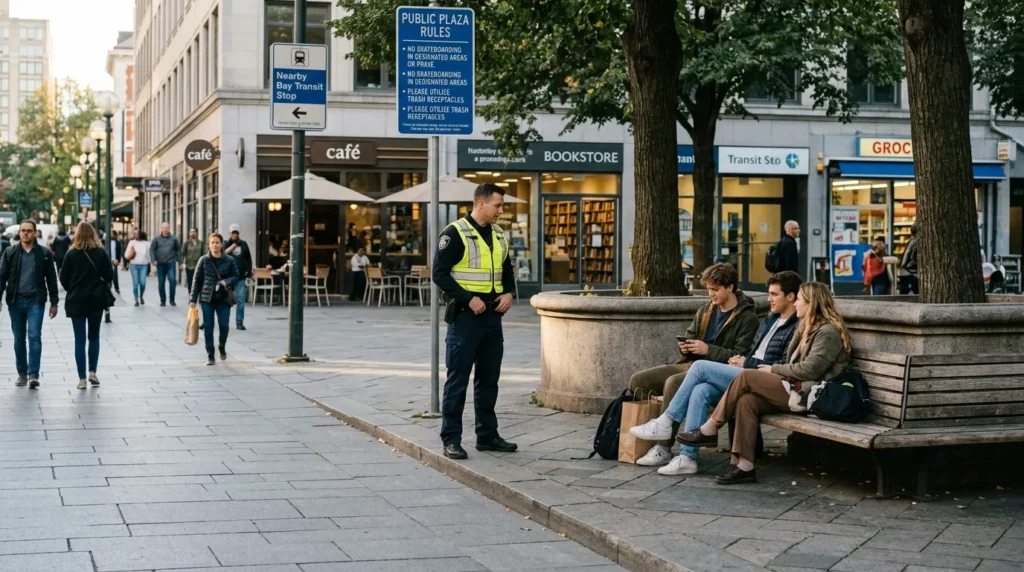
Here are a few natural examples:
- The store posted a sign asking people not to loiter near the entrance.
- We stopped talking and left because the guard thought we were lingering too long.
- She told the children not to loiter on their way to school.
- Several people were waiting for the concert, so their presence was obvious.
Notice that context changes the tone. The word can refer to wasting time, lingering somewhere, or behavior covered by a local rule.
The Key Point to Remember
The word usually means lingering somewhere without an obvious purpose. That everyday definition is straightforward.
Legal questions are more specific. Check the local rule, the type of property, and the surrounding behavior before assuming that standing or waiting somewhere is unlawful.
For more plain-language explainers, continue exploring Magazetty’s Education and Law resources.
Frequently Asked Questions
It means staying or hanging around somewhere without an obvious purpose. It can also mean moving slowly or wasting time rather than continuing an activity.
It generally means you shouldn’t remain around that location without a relevant reason. The exact legal effect of a sign depends on property rules and local law.
Usually, waiting for a specific person gives you an identifiable purpose. Whether any local rule applies still depends on where you are and the circumstances.
No. Trespassing primarily concerns entering or remaining on property without permission. Loitering can occur in a place where a person is otherwise allowed to be.
That depends on the jurisdiction and the conduct involved. Local rules may address particular places, prohibited purposes, obstruction, or refusal to comply with a lawful order. Broad ordinances may also face legal or constitutional limits.
