


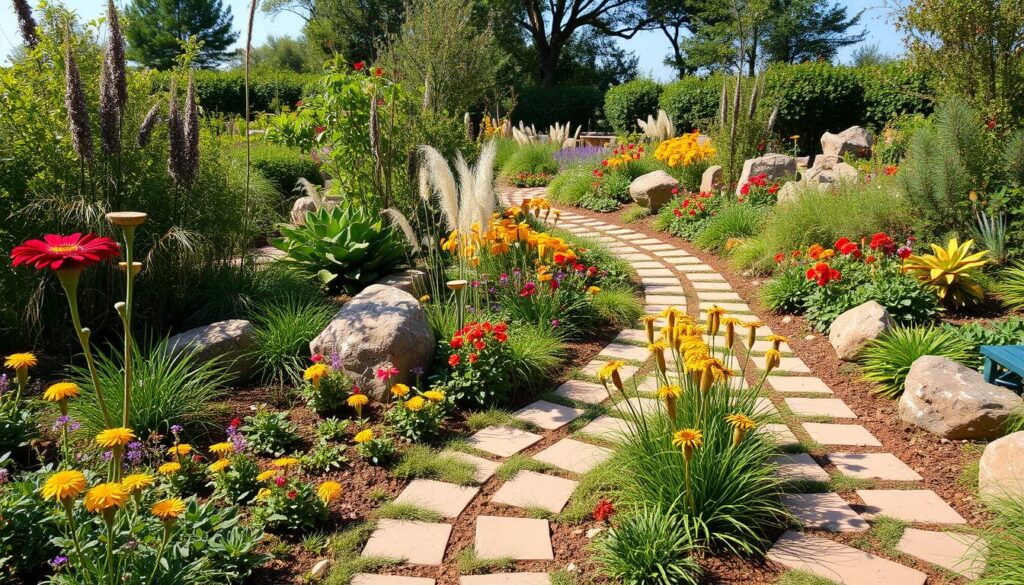
If you want a garden that looks great all year, start with a clear idea of how you want it to look. Try sketching it out or using some garden planning tools to figure out where each plant will do best. This helps you picture how it’ll change with the seasons.
Think about the size and shape of your space so things don’t get too squished, and everything looks nice together. With some smart planning, your garden can stay lively and fun throughout the year. This careful thinking makes sure your garden is always full of colour and life.
Choose Plants that Bloom in Different Seasons
Dreaming of a lively garden all year round? You can absolutely make it happen by choosing plants that bloom at different times of the year. Start by exploring which perennials, annuals, and shrubs thrive in spring, summer, autumn, and winter.
For spring, think about planting daffodils and tulips. They often make their first appearance as early as March, adding a burst of colour after winter. Summer, on the other hand, is a great season for roses and sunflowers.
Picture sunflowers reaching for the sky, sometimes growing up to 3 feet tall! As autumn rolls in, chrysanthemums take over with their warm hues, and during the winter chill, hellebores add a delicate charm to your garden.
Keeping a little garden diary can be a game-changer. Note down the plants, their blooming times, colours, and heights. This way, you can plan out your garden’s look and ensure there’s always something brightening up your space.
Mixing different plants not only keeps the colours coming but also adds interesting textures and layers. Imagine your outdoor space transforming into a captivating scene throughout the year.
If you’re ever in doubt, having a chat with local garden experts can be incredibly helpful. Sharing planting tips with friends or asking for advice at your local garden centre can make your gardening journey uniquely yours.
So, why not give one or two of these plants a try and see how your garden transforms through the seasons? We’d love to hear how it turns out!
Consider Sunlight and Shade
To keep your garden looking great, it’s important to know how much light your plants need. Put sun-loving plants where they can soak up the most rays all day. For those that prefer shade, find spots under trees or near walls where they get less direct light.
Watch how the sun moves across your garden and plan where to put each plant. This way, your garden not only looks nicer, but your plants stay healthy, and you won’t have to replace them as often.
Consider The Height and Structure of Plants
Designing a garden is like setting up a stage. To make it look awesome, put tall plants like fox gloves at the back.
Then, place medium ones like dwarf hydrangeas in the middle to catch the eye, and pop in shorter plants like lavender at the front for extra depth. This way, your garden looks great, and every plant gets enough sunlight, so they don’t block each other.
Knowing each plant’s size and shape helps them all get along without fighting for light and space. If you’re not sure what to do, popping by a garden Centre or chatting with a gardener can really help. With a bit of planning, your garden can be a lovely, balanced haven.
Select Evergreen Plants for Year-Round Structure
Adding evergreen plants to your garden keeps it lively and neat all year, even when other plants take a break in winter.
Plants like holly, boxwood, and junipers give your garden shape and texture, sticking around when flowers disappear. They’re tough and stay green even when it’s cold, giving your garden some color and personality.
Plus, they cut down on how often you need to replant, saving you time and hassle. If you’re not sure which ones to pick, chatting with a landscaping expert can help you find the best fit for your garden’s soil and weather.
Plan for Seasonal Maintenance
Keeping your garden looking awesome all year is all about regular care. Think about setting up a routine for each season.
Maybe jot down a calendar with tasks like trimming, removing old flowers, giving plants a boost with fertilizer, and splitting them up when needed. This helps you stay on track without stress.
For example, trim in late winter or early spring, tidy up blooms in summer, feed plants early spring or late summer, and split them in autumn. Doing all this keeps your plants happy and blooming loads.
If it feels a bit too much, you could always get some help from a gardening service. They’ll keep your garden looking fab and sorted.
Use Mulch and Organic Matter to Improve Soil Health
If you want to give your garden a boost, start by sprucing up the soil with some mulch and organic stuff. Just lay down a 2 to 3-inch layer of mulch around your plants. This keeps the soil moist, stops weeds, and keeps the temperature just right.
Your plants will thank you on hot days! Throw in some compost or well-rotted manure as well. It’s packed with nutrients and helps plants grow strong without needing chemical fertilizers. With good soil, your garden’s going to look amazing.
You could also chat with gardening pros to figure out the best mulch and organic stuff for your garden’s needs. It’ll keep your plants happy and healthy!
Creating a Budget-Friendly Garden
You don’t need to splash out to cultivate a lovely garden. Just make some smart choices! Pop down to your local market in Camden or wherever’s nearest, and you might just find a bargain plant that thrives in your area.
It’s not only easier on the wallet but also supports local growers and is kinder to the environment. Ever been to a plant swap? They’re a fab way to exchange a rosemary bush for a tomato seedling, and you might make a new mate while you’re at it.
Starting plants from seeds or cuttings is another brilliant way to save. Imagine planting a tiny seed that costs as little as 50p, then watching it sprout and grow into something beautiful.
My neighbor once turned a packet of seeds into a blooming flower bed – all for less than a fiver. Plus, many UKS garden centers host ‘cut-and-share’ days, so you can take home cuttings at no extra cost.
And let’s not forget about the magic of kitchen waste. Turn those veggie peelings into compost, which not only saves you money but also enriches your garden soil. Joining a gardening club is a top tip too.
Groups like the Royal Horticultural Society offer workshops, seed exchanges, and a chance to chat with fellow garden enthusiasts over a cuppa.
Why not give one of these ideas a go and see how your garden grows? Share your progress, and let’s swap stories!
Conclusion
Starting a garden is all about having a good plan. You might draw out your garden on paper or use a garden app to see where everything will go.
Think about the size and shape of your space so everything fits nicely. It’s also smart to picture how it’ll look in different seasons, so you don’t end up with crowded plants. This way, your garden stays balanced and looks great all year.
Having a solid plan makes sure your plants don’t fight over sunlight and water, letting them grow well together. If you want extra tips, chatting with garden pros can really help make the most of your garden space.
For more tips on planning a garden that blooms in every season, you might find this article on factory tours insightful: 7 Questions to Ask About a Factory Tour
