


Introduction
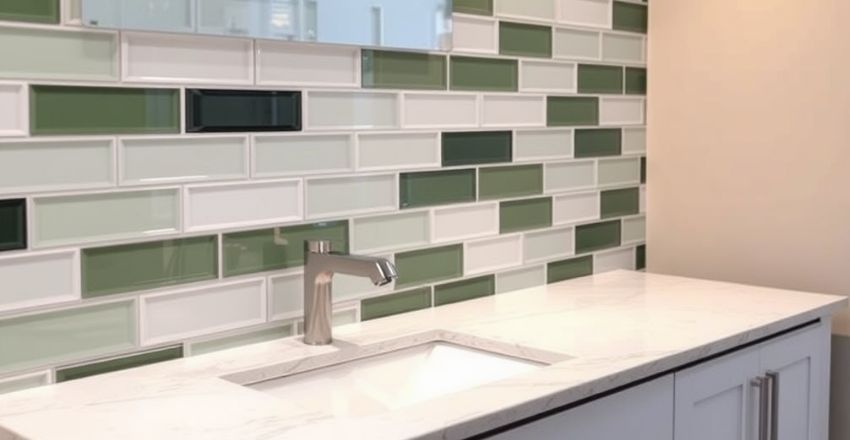
A backsplash for bathroom vanity is a protective feature and a key design element. It helps shield the wall from water damage, stains, and mould while enhancing the bathroom’s aesthetic. The backsplash for bathroom vanity can be made from materials such as ceramic, glass, marble, or natural stone, each offering unique durability, style, and maintenance benefits.
Popular design ideas include neutral tones for a minimalist look or bold patterns like mosaics and subway tiles to add personality. Proper maintenance ensures the backsplash remains clean and visually appealing, with materials like ceramic and glass being easy to clean.
Reflective materials can make the space appear larger in small bathrooms. Depending on materials and complexity, the cost can range from $500 to $1,000 for professional installation.
| Basics | Details |
| Importance | Protects walls and enhances bathroom design. |
| Materials | Ceramic, glass, marble, and stone for durability. |
| Design Ideas | Use colour, patterns, and textures for style. |
| Right Height | It can be a few inches or full-wall height. |
| Maintenance | Regular cleaning for long-lasting appeal. |
| Small Bathrooms | Reflective tiles make small spaces feel larger. |
| Cost | Ceramics is affordable; marble costs more. |
| DIY Installation | Easy with ceramic tiles, complex designs need pros. |
| Protection | Prevents water damage and mildew growth. |
| Aesthetic Appeal | Enhances bathroom style and visual appeal. |
Choosing the Right Backsplash for Your Bathroom Vanity: Style Meets Function
A bathroom vanity backsplash is a practical and stylish design element that enhances both the look and usability of your space. Positioned directly behind the sink or countertop, a backsplash protects walls from water damage, soap splashes, and daily wear while contributing to the overall aesthetic. Whether you prefer sleek ceramic tiles with subtle texture, mosaic patterns that add visual interest, or natural stone for a touch of luxury, the variety of materials and finishes available makes it easy to complement any bathroom style—from minimalist and modern to traditional and ornate. Thoughtful backsplash selection also allows you to introduce color, pattern, or contrast, creating a focal point that ties together fixtures, cabinetry, and countertops while serving a functional purpose.
Importance of a Backsplash for Bathroom Vanity
A backsplash for bathroom vanity is essential for protecting the wall behind the sink from water damage and stains. It helps prevent mould and mildew buildup while making cleaning easier. Additionally, a backsplash serves as a design element, elevating the bathroom’s overall look. It can enhance the appearance and functionality, ensuring the longevity of bathroom walls.
Materials
Choosing the right material for a backsplash for vanity is key for durability and style. Popular materials include ceramic, glass, marble, and natural stone. Each material offers unique benefits: marble is luxurious, while ceramic is cost-effective and easy to maintain. Glass tiles are sleek and reflective. The material chosen will impact the backsplash’s cost, appearance, and maintenance.
Design Ideas
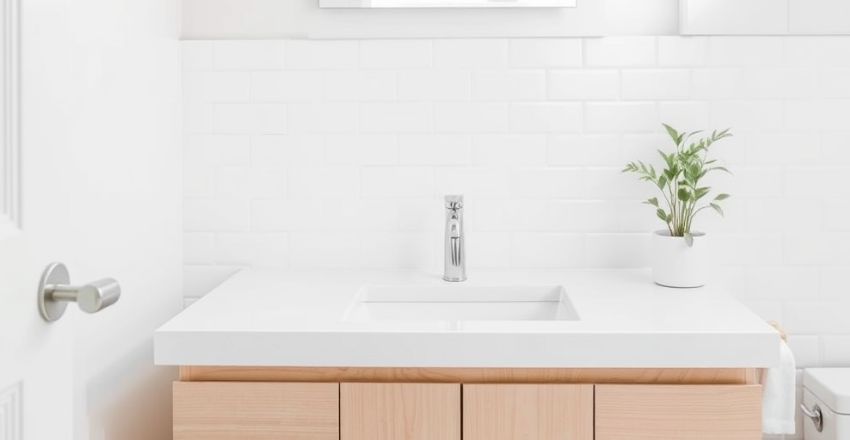
Designing a backsplash for bathroom vanity allows you to experiment with colours, patterns, and textures. Neutral-toned tiles create a minimalist look, while bold, colourful designs can add personality. Subway tiles are classic, while mosaic patterns or geometric shapes offer a contemporary vibe. Choosing the right design helps complement the bathroom’s overall theme, contributing to a cohesive, stylish space.
Right Height
When deciding on the backsplash for bathroom vanity, consider the height to maximize style and protection. Typically, the backsplash extends a few inches above the countertop, but some prefer a full-height backsplash that covers the entire wall. Full-height backsplashes offer more protection against water damage and dramatically affect the space, making the room feel larger.
Maintenance and Cleaning
Proper backsplash maintenance for bathroom vanity ensures it stays clean and beautiful. Different materials require different care routines: marble needs resealing every 6 to 12 months, while ceramic and glass are easy to clean with soap and water. Regular cleaning prevents mould, mildew, and grime buildup. Keeping the backsplash well-maintained helps preserve its longevity and aesthetic appeal.
Small Bathrooms
A backsplash for bathrooms can enhance small bathrooms by making them appear larger. Light-colored materials, reflective surfaces like glass, or mirrored tiles can add depth and brightness to compact spaces. A vertical design may also help elongate the walls, giving the room an airy, spacious feel. A minimalist design is often the best choice for smaller bathrooms.
Cost Considerations
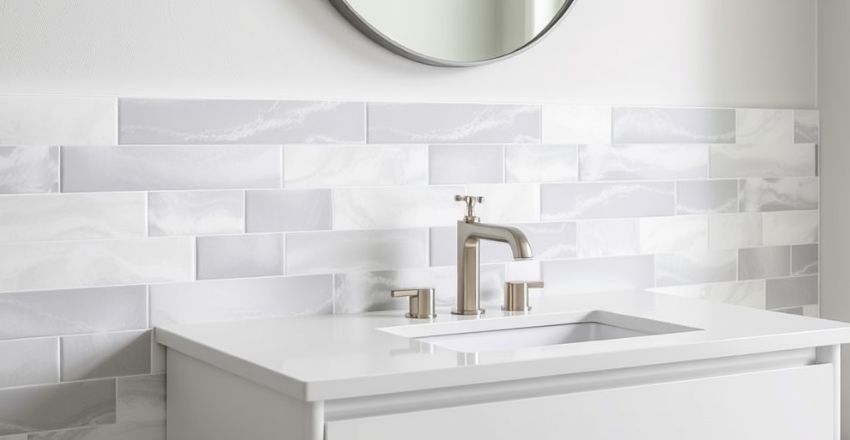
The backsplash cost for bathroom vanity varies depending on the material, design complexity, and installation fees. Ceramic tiles are the most budget-friendly, while premium materials like marble, natural stone, or glass can be more expensive. DIY installation can lower costs, with professional installation costing between $500 and $1,000 for materials and labour, depending on the area and materials.
DIY Installation
Installing a backsplash for the bathroom can save money and be fun. You can create a polished look with the right tools, adhesive, and grout. However, intricate designs or heavier materials may require professional help. DIY installation is most suitable for beginners with easy-to-handle materials like ceramic tiles. It’s an affordable and rewarding approach.
Conclusion
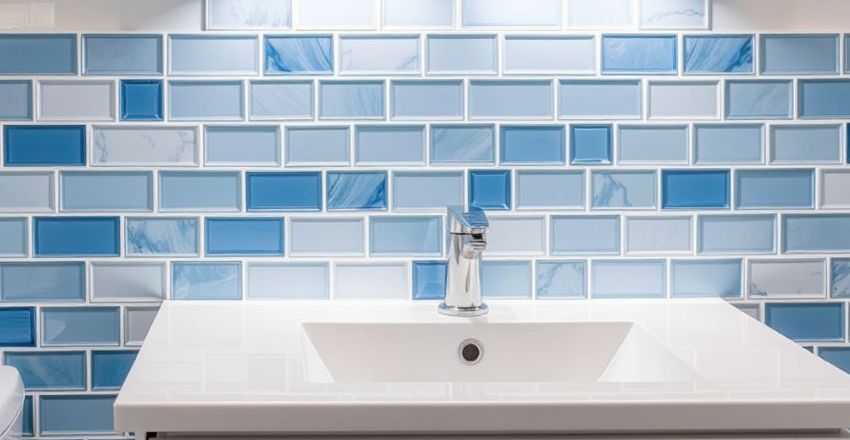
In conclusion, a backsplash for bathroom vanity serves functional and aesthetic purposes. It protects the wall from water damage while enhancing the bathroom’s overall look. With various materials, designs, and heights available, it can suit different styles and budgets. Regular maintenance ensures longevity and can even make small spaces appear more prominent. Whether DIY or professionally installed, a backsplash adds value and beauty to any bathroom.
Apart from that if you want to know about “Need For Build: Home Remodelling Expert ” then please visit our “Home improvement” Category.
FAQs
A backsplash protects the wall behind the sink from water damage, stains, and mould buildup. It also adds aesthetic value, enhancing the bathroom’s overall look and functionality.
Popular materials include ceramic, glass, marble, and natural stone. Ceramic is affordable and easy to maintain, marble offers a luxurious feel, and glass adds a sleek, modern touch.
The backsplash height typically extends a few inches above the countertop, but some choose a full-wall height for added protection and a more dramatic effect.
Regular cleaning is essential. Marble may require resealing every 6 to 12 months, while ceramic and glass can be cleaned with soap and water.
While not required, a backsplash helps protect the wall from water splashes and moisture damage while also enhancing the bathroom’s overall design.
