


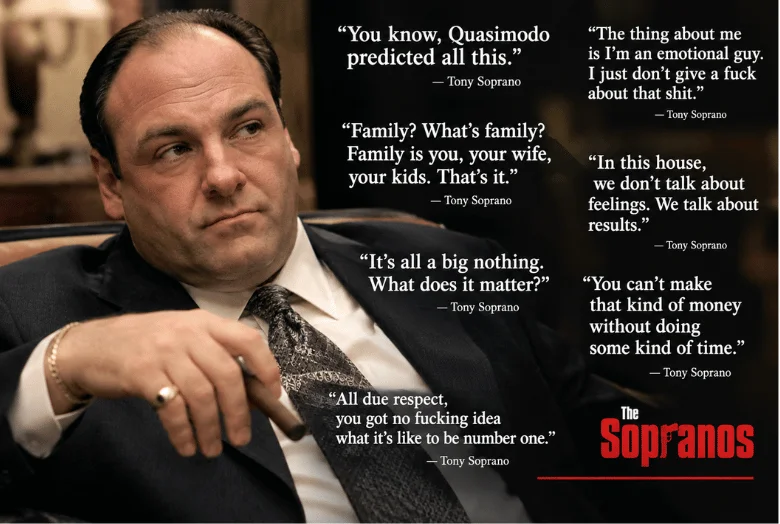
Tony Soprano quotes remain memorable because they rarely sound like polished television dialogue. They can be funny, threatening, defensive, or unexpectedly thoughtful. James Gandolfini made each line feel like something his complicated New Jersey mob boss might genuinely say.
The best lines also reveal the contradictions that made the character compelling. Tony demands loyalty while betraying people, values family while damaging his own, and seeks therapy while resisting change. His dialogue captures those conflicts without turning him into a simple hero or villain.
Direct answer: The most memorable Tony Soprano lines combine dark humor, blunt observations, threats, family frustrations, and flashes of vulnerability. They work because Tony can sound commanding in one scene and deeply insecure in another. His best dialogue reveals the gap between the powerful boss he presents and the troubled person underneath.
Tony Soprano at a Glance
| Detail | Information |
|---|---|
| Character | Anthony “Tony” Soprano |
| Series | The Sopranos |
| Actor | James Gandolfini |
| Original U.S. run | 1999–2007 |
| Setting | New Jersey |
| Main roles | Crime boss, husband, father, therapy patient |
| Quote themes | Respect, family, power, anxiety, humor, loyalty |
| Created by | David Chase |
Why Tony’s Dialogue Still Stands Out
Great dialogue does more than give viewers something memorable to repeat. It tells us who a character is without stopping the story for an explanation. Tony’s words repeatedly expose his temper, intelligence, insecurity, humor, and instinct for control.
His speech also moves easily between suburban America and organized crime. A conversation about food can become an argument about family or authority. A therapy session can become funny before revealing something painful about his emotional life.
That combination helps explain why his dialogue remains popular with American television audiences. Fans can recognize the character from a few words and a particular attitude. Even simple observations often carry another meaning because viewers know what Tony is capable of doing.
12 Memorable Tony Soprano Quotes and What They Reveal

The strongest Tony Soprano quotes are memorable for one reason. Some capture his authority, while others expose insecurity or produce unexpected comedy. These twelve lines represent several different sides of the character.
1. “Those who want respect, give respect.”
This is one of Tony’s clearest statements about power and hierarchy. Respect, in his world, is never separated from behavior and status. The line sounds reasonable until you consider how often fear supports that idea of respect.
2. “Even a broken clock is right twice a day.”
Tony frequently uses familiar expressions to dismiss people without giving them much credit. This line lets him acknowledge a correct point while maintaining superiority. It is concise, sarcastic, and perfectly suited to his personality.
3. “If you can quote the rules, then you can obey them.”
Rules matter greatly to Tony when someone else breaks them. His own relationship with rules is far more flexible. That contradiction gives the line an extra layer for viewers who understand his behavior.
4. “What use is an unloaded gun?”
Few lines summarize Tony’s practical worldview this quickly. Objects, relationships, and authority matter to him when they can produce results. His thinking is often direct because hesitation can carry serious consequences in his profession.
5. “Every day is a gift.”
Coming from Tony, an optimistic statement never stays uncomplicated for long. He understands mortality better than most suburban fathers because violence surrounds his professional life. His darker follow-up about unwanted gifts turns a positive thought into typical Soprano humor.
6. “More is lost by indecision than wrong decision.”
Tony’s world rewards action, even when that action creates new problems. The statement fits a leader who constantly makes decisions involving money, loyalty, and personal danger. It also explains why patience is rarely his strongest quality.
7. “I find I have to be the sad clown.”
This image captures an important part of his emotional conflict. Tony believes he must project strength while privately struggling with anxiety, anger, and sadness. Therapy gives viewers access to feelings that his crew would rarely see.
8. “All this from a slice of gabagool?”
Food is never merely food in The Sopranos. Meals connect family, heritage, comfort, arguments, and Tony’s physical appetites. The humor works because an ordinary refrigerator visit can sit beside much larger emotional problems.
9. “When you’re married, you’ll understand the importance of fresh produce.”
Tony can turn a mundane household subject into a declaration about adulthood. The seriousness of his delivery makes the observation funnier. It also reflects how domestic concerns remain important despite the extraordinary violence surrounding his life.
10. “Oh, poor baby.”
Tony has little patience for complaints when he believes someone is being self-pitying. The phrase is dismissive rather than sympathetic. That reaction becomes especially revealing because Tony himself regularly wants others to understand his frustrations.
11. “Is everyone in my life … bananas?”
Chaos follows Tony through his family and professional relationships. Yet he often behaves as though everyone else created that chaos independently. The joke works because viewers can see how frequently he contributes to the disorder.
12. “Cunnilingus and psychiatry brought us to this.”
Few television crime bosses could summarize a major conflict this way. The line mixes embarrassment, family politics, therapy, and absurd humor. That strange combination is a strong example of the show’s distinctive comic voice.
Funny Tony Soprano Lines Work Because the Character Stays Serious
Tony rarely behaves like a conventional sitcom character waiting for a punchline. Much of the comedy comes from how seriously he treats absurd situations. His confidence can make a strange observation sound like unquestionable wisdom.
Food provides some of the clearest examples. Produce, cold cuts, restaurant meals, and Italian-American dishes regularly appear during emotionally charged conversations. The contrast between domestic concerns and criminal business creates comedy without changing the show’s dramatic identity.
His misuse of sayings adds another comic layer. He sometimes bends expressions, remembers them imperfectly, or applies them in strange situations. These verbal mistakes make him feel less scripted and more like a recognizable person speaking under pressure.
Quotes About Respect, Leadership, and Being the Boss
Leadership is one of the strongest themes in Tony’s dialogue. He wants the privileges of authority but repeatedly complains about its isolation. That conflict becomes sharper as his responsibilities and enemies increase.
His comments about respect also show how differently characters define the word. “Tony” can mean courtesy, obedience, recognition of rank, or fear depending on the situation. Viewers therefore have to read the circumstances rather than treat his statements as universal life advice.
The same distinction matters when his leadership lines circulate online. A sentence can sound motivational when separated from the series. Inside the story, that sentence may accompany manipulation, intimidation, or a decision with destructive consequences.
Family Quotes Reveal Another Side of the Character
Tony describes himself as a family man, and that identity matters deeply to him. He wants his children to have opportunities beyond organized crime. He also wants the stability and social respectability represented by his suburban home.
His behavior often undermines those goals. Arguments with Carmela expose conflicts involving fidelity, money, parenting, and honesty. Conversations with Meadow and A.J. show a father who can be protective, impatient, affectionate, controlling, and confused.
These scenes prevent the character from becoming a standard screen gangster. Viewers see him worrying about school, dinner, relationships, and household problems. Those ordinary concerns make the darker parts of his life feel more unsettling rather than less significant.
Readers interested in more television personalities and Hollywood stories can explore Magazetty’s broader Entertainment coverage. The site also features profiles of performers, including Avi Rothman and Kim Wayans. Those features provide more background on actors, comedy, film, and American popular culture.
Therapy Gives the Quotes Their Emotional Weight
The therapy scenes between Tony and Dr. Jennifer Melfi are central to the series. They allow him to discuss panic, childhood, his mother, marriage, anger, and personal dissatisfaction. Yet therapy never becomes a simple path toward transformation.
Tony can identify his feelings while continuing harmful patterns. He sometimes uses psychological language to understand himself, then uses that knowledge defensively. This tension makes his sessions more interesting than straightforward confession scenes.
Gandolfini’s performance is crucial to that effect. Silence, facial expressions, hesitation, and sudden anger can change what a sentence means. Reading the words captures only part of what makes these scenes memorable.
What Tony Soprano Quotes Tell Us About the Character
| Theme | What his dialogue often reveals |
|---|---|
| Respect | He connects respect with hierarchy and obedience. |
| Leadership | Authority brings power but also isolation. |
| Family | He values family while frequently hurting it. |
| Therapy | He wants relief without always wanting change. |
| Humor | Sarcasm helps him deflect discomfort. |
| Loyalty | Loyalty matters until competing interests appear. |
| Anxiety | His confidence frequently hides emotional distress. |
| Food | Everyday pleasures provide comfort and comic relief |
The table shows why individual lines can have several interpretations. A funny remark may also reveal anxiety or insecurity. A statement about loyalty may sound principled while exposing Tony’s double standards.
That complexity separates memorable dialogue from generic tough-guy sayings. The words matter because viewers understand the character delivering them. Context turns short sentences into observations about power, masculinity, family, and self-deception.
Why These Lines Remain Popular With Fans
The Sopranos gives viewers a large vocabulary of recognizable expressions and reactions. Many lines are short enough for conversations, captions, memes, and fan discussions. Their distinctive rhythm also makes them easy to associate with Gandolfini’s performance.
Yet nostalgia alone does not explain their staying power. The dialogue connects everyday frustrations with an extreme fictional character. People recognize complaints about work, relatives, marriage, stress, and responsibility even when Tony’s circumstances are completely different.
That familiarity creates an unusual relationship between character and audience. Viewers may understand his frustration without approving his choices. The writing repeatedly allows recognition and moral discomfort to exist at the same time.
Frequently Asked Questions About Tony Soprano Quotes
What is the most famous Tony Soprano quote?
There is no official single most famous line. “Those who want respect, give respect” is among the most widely repeated. Lines about family, fresh produce, therapy, and being “Number One” also appear frequently in fan discussions.
What are the best Tony Soprano quotes about respect?
His best-known respect line states that people seeking respect should give it. The scene concerns hierarchy rather than generic motivational advice. Its meaning becomes clearer when viewers consider Tony’s difficult relationship with Richie Aprile.
Why are his funny quotes so memorable?
Tony delivers absurd observations with complete seriousness. His malapropisms, sarcasm, food references, and impatience create humor without making him a comic character. Gandolfini’s delivery adds timing that plain text cannot fully reproduce.
Are Tony’s leadership quotes good life advice?
They are better read as character dialogue than universal guidance. Tony operates within a violent criminal organization with distorted ideas about authority and loyalty. A useful-sounding sentence can carry a darker meaning within the episode.
Why are the therapy quotes important?
Therapy reveals fears and insecurities that Tony hides from most people around him. These conversations also expose his resistance to responsibility and meaningful change. They help audiences understand him without excusing his actions.
Who played Tony Soprano?
James Gandolfini played the character throughout The Sopranos. His performance combined intimidation, humor, vulnerability, and explosive anger. The delivery is a major reason short pieces of dialogue became so recognizable.
Why the Words Still Matter
The best Tony Soprano dialogue works because it captures several versions of one person. He can be a frightened patient, demanding boss, frustrated father, unfaithful husband, and funny dinner companion. Those identities constantly collide rather than fitting neatly together.
That is why revisiting Tony Soprano quotes offers more than a collection of tough-guy sayings. The lines reveal how the series built character through contradictions, humor, and uncomfortable self-awareness. Rewatching the scenes behind them provides the fullest picture of why the dialogue still resonates.
For more television, film, celebrity, and popular-culture coverage, continue through Magazetty’s Entertainment section. Related profiles can provide another starting point for exploring the performers and personalities behind memorable American entertainment.
